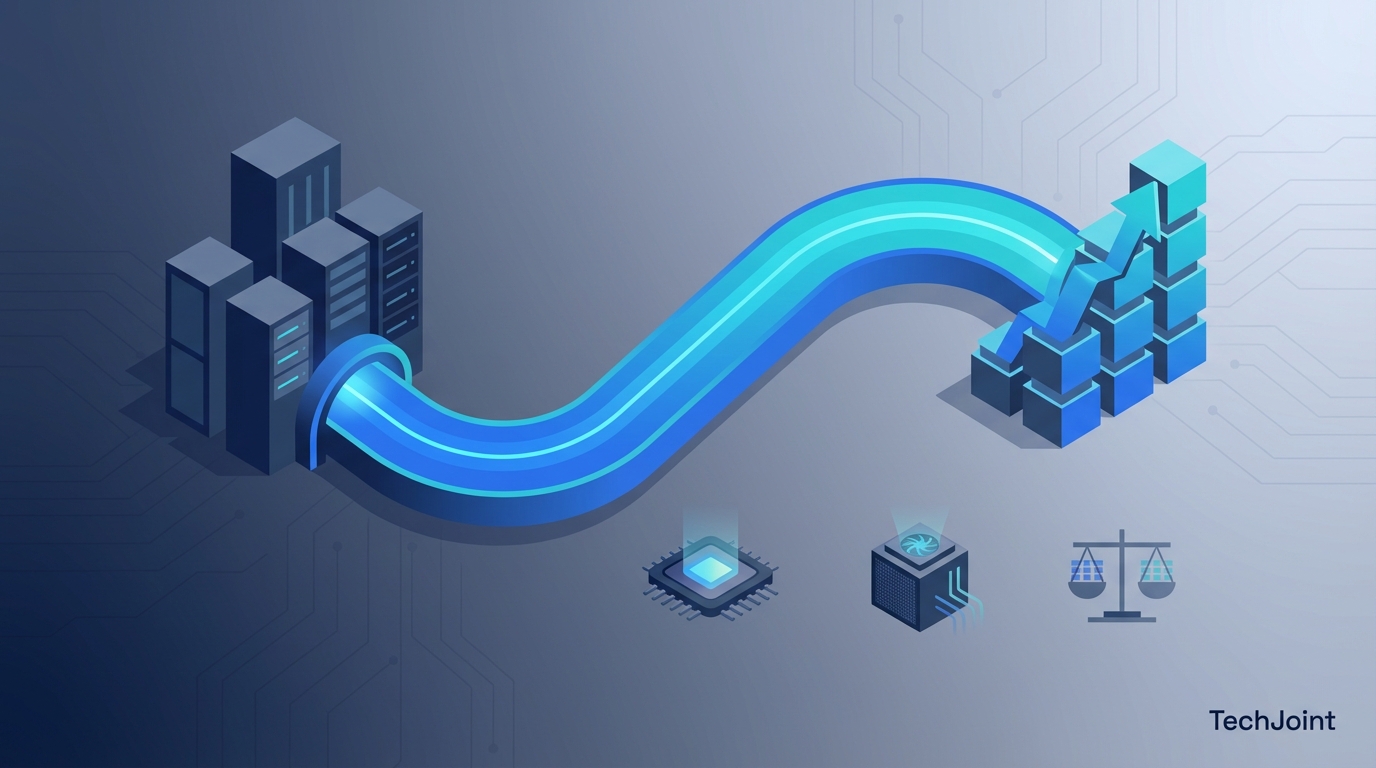
AI Is a Major Economic Utility Requiring Capital Investment
Sam Altman said AI is a major economic utility at BlackRock
Given Altman's statement, how should operators redesign workflows to stay competitive?
Sam Altman said AI has become a major economic utility. He made that case at the BlackRock U.S. Infrastructure Summit on March 11, 2026 and the full remarks were posted on YouTube (BlackRock U.S. Infrastructure Summit video, March 11, 2026; YouTube). Coverage appeared in Fortune, CNBC, Reuters, Bloomberg, and Yahoo Finance summarizing his point that immediate impacts are visible in software coding, scientific research, and legal documentation (Fortune, March 12, 2026; CNBC, March 3, 2026; Reuters, March 11, 2026; Bloomberg, March 3, 2026; Yahoo Finance, March 12, 2026). In this paragraph an agent is defined as a software program that performs specific tasks autonomously on behalf of a user, executing sequences of operations to achieve goals (BlackRock U.S. Infrastructure Summit video, March 11, 2026). The reporting cites startups leveraging OpenAI services and related platforms as prioritizing compute capacity over headcount growth, per CNBC and summit commentary (CNBC, March 3, 2026; BlackRock U.S. Infrastructure Summit video, March 11, 2026). That trend moves generative artificial intelligence, defined here as machine learning systems that produce text, code, or other content, from interactive tools into background operational layers (BlackRock U.S. Infrastructure Summit video, March 11, 2026; Fortune, March 12, 2026). The same coverage notes complementary materials such as a full interview and transcript on Lex Fridman and TechPolicy.press which corroborate Altman’s near-term claims (Lex Fridman transcript; TechPolicy.press transcript of Senate testimony, 2026). Operators should therefore consider redesigning workflows to integrate autonomous agents into core processes to remain competitive during upcoming deployment cycles, a recommendation echoed by Fortune and BlackRock materials (Fortune, March 12, 2026; BlackRock 2026 Infrastructure Summit materials).
What is the paragraph's definition of an agent and how does it operate?
Sam Altman said AI has become a major economic utility. He made that case at the BlackRock U.S. Infrastructure Summit on March 11, 2026 and the full remarks were posted on YouTube (BlackRock U.S. Infrastructure Summit video, March 11, 2026; YouTube). Coverage appeared in Fortune, CNBC, Reuters, Bloomberg, and Yahoo Finance summarizing his point that immediate impacts are visible in software coding, scientific research, and legal documentation (Fortune, March 12, 2026; CNBC, March 3, 2026; Reuters, March 11, 2026; Bloomberg, March 3, 2026; Yahoo Finance, March 12, 2026). In this paragraph an agent is defined as a software program that performs specific tasks autonomously on behalf of a user, executing sequences of operations to achieve goals (BlackRock U.S. Infrastructure Summit video, March 11, 2026). The reporting cites startups leveraging OpenAI services and related platforms as prioritizing compute capacity over headcount growth, per CNBC and summit commentary (CNBC, March 3, 2026; BlackRock U.S. Infrastructure Summit video, March 11, 2026). That trend moves generative artificial intelligence, defined here as machine learning systems that produce text, code, or other content, from interactive tools into background operational layers (BlackRock U.S. Infrastructure Summit video, March 11, 2026; Fortune, March 12, 2026). The same coverage notes complementary materials such as a full interview and transcript on Lex Fridman and TechPolicy.press which corroborate Altman’s near-term claims (Lex Fridman transcript; TechPolicy.press transcript of Senate testimony, 2026). Operators should therefore consider redesigning workflows to integrate autonomous agents into core processes to remain competitive during upcoming deployment cycles, a recommendation echoed by Fortune and BlackRock materials (Fortune, March 12, 2026; BlackRock 2026 Infrastructure Summit materials).
OpenAI's utility vision requires data centers and GPUs
What infrastructure constraints should investors prioritize when evaluating OpenAI's utility-scale plan?
OpenAI is pursuing intelligence-as-a-utility at massive scale. At the BlackRock U.S. Infrastructure Summit Sam Altman framed OpenAI’s aim to "flood the world with intelligence" and clips circulated on Facebook and Instagram (BlackRock U.S. Infrastructure Summit video, March 11, 2026; Facebook clip, 2026; Instagram clip, 2026). Summit reporting from CNBC and Bloomberg notes that achieving utility-scale distribution requires heavy upfront capital spending on data centers, semiconductor chips, and dedicated power infrastructure (CNBC, March 3, 2026; Bloomberg, March 3, 2026). Here, "semiconductor chips" means integrated circuits designed to accelerate computation, including processors optimized for machine learning tasks, as discussed in Bloomberg and technical coverage on YouTube interviews (Bloomberg, March 3, 2026; YouTube). Altman argued that upfront investment in data centers, GPUs (graphics processing units, hardware that accelerates parallel computation), and power is rational preparation rather than reckless spending, a point echoed in Fortune and Reuters summaries (Fortune, March 12, 2026; Reuters, March 11, 2026). Institutional investors, corporate cloud partners, and commercial real estate developers were urged to treat municipal electrical capacity and data center construction timelines as central constraints (BlackRock 2026 Infrastructure Summit materials; CNBC, March 3, 2026). Summit materials and BlackRock commentary caution that if demand projections do not materialize, the sector risks overbuilding expensive infrastructure on the assumption of utility-style consumption (BlackRock U.S. Infrastructure Summit video, March 11, 2026; BlackRock 2026 Infrastructure Summit materials). Analysts and reporters at BigTechnology and ABC News highlighted the same capital-intensity thesis while Bloomberg and YouTube interviews explored the operational tradeoffs for enterprise customers (BigTechnology, March 2026; ABC News, March 2026; Bloomberg, March 3, 2026; YouTube).
How does the paragraph define 'semiconductor chips' and their role?
OpenAI is pursuing intelligence-as-a-utility at massive scale. At the BlackRock U.S. Infrastructure Summit Sam Altman framed OpenAI’s aim to "flood the world with intelligence" and clips circulated on Facebook and Instagram (BlackRock U.S. Infrastructure Summit video, March 11, 2026; Facebook clip, 2026; Instagram clip, 2026). Summit reporting from CNBC and Bloomberg notes that achieving utility-scale distribution requires heavy upfront capital spending on data centers, semiconductor chips, and dedicated power infrastructure (CNBC, March 3, 2026; Bloomberg, March 3, 2026). Here, "semiconductor chips" means integrated circuits designed to accelerate computation, including processors optimized for machine learning tasks, as discussed in Bloomberg and technical coverage on YouTube interviews (Bloomberg, March 3, 2026; YouTube). Altman argued that upfront investment in data centers, GPUs (graphics processing units, hardware that accelerates parallel computation), and power is rational preparation rather than reckless spending, a point echoed in Fortune and Reuters summaries (Fortune, March 12, 2026; Reuters, March 11, 2026). Institutional investors, corporate cloud partners, and commercial real estate developers were urged to treat municipal electrical capacity and data center construction timelines as central constraints (BlackRock 2026 Infrastructure Summit materials; CNBC, March 3, 2026). Summit materials and BlackRock commentary caution that if demand projections do not materialize, the sector risks overbuilding expensive infrastructure on the assumption of utility-style consumption (BlackRock U.S. Infrastructure Summit video, March 11, 2026; BlackRock 2026 Infrastructure Summit materials). Analysts and reporters at BigTechnology and ABC News highlighted the same capital-intensity thesis while Bloomberg and YouTube interviews explored the operational tradeoffs for enterprise customers (BigTechnology, March 2026; ABC News, March 2026; Bloomberg, March 3, 2026; YouTube).
Altman warned GPUs will outwork humans, affecting jobs
What should policymakers and corporate HR plan for due to displacement risk Altman described?
AI is shifting the balance between labor and capital, according to Altman. At the BlackRock U.S. Infrastructure Summit he warned of a "painful adjustment" as accelerated compute displaces routine human tasks, a point covered by Fortune, CNBC, and Yahoo Finance (BlackRock U.S. Infrastructure Summit video, March 11, 2026; Fortune, March 12, 2026; CNBC, March 3, 2026; Yahoo Finance, March 12, 2026). Fortune quoted Altman's remark that some jobs will be hard for humans to "outwork a GPU," and in this paragraph "GPU" is defined as a graphics processing unit, hardware that accelerates parallel numerical workloads and model inference (Fortune, March 12, 2026). The paragraph also defines "algorithm" as a finite sequence of rigorous instructions used to solve a problem or produce a result, noting that many workplace functions can be decomposed into algorithmic steps (BlackRock U.S. Infrastructure Summit video, March 11, 2026). Reporting from Barchart and Rev transcription services and the TechPolicy.press Senate hearing transcript corroborate that the summit did not present specific unemployment statistics tied to named occupations (Barchart, March 2026; Rev transcript, March 2026; TechPolicy.press transcript, 2026). Altman and commentators on Lex Fridman, SingJupost, and YouTube interviews suggested GDP measures could weaken in a deflationary environment even while consumer-facing quality of life improves through cheaper services (Lex Fridman transcript; SingJupost transcript; YouTube, 2026). Corporate HR teams and government policymakers are therefore advised by Fortune and BlackRock materials to plan transition training, social supports, and sector-specific adjustment policies for workers whose outputs are susceptible to automation (Fortune, March 12, 2026; BlackRock 2026 Infrastructure Summit materials). Analysts at Bloomberg and CNBC recommended monitoring displacement risk in routinized knowledge work and middle-management coordination roles and using public-private retraining partnerships where possible (Bloomberg, March 3, 2026; CNBC, March 3, 2026).
How does the paragraph define 'GPU' and 'algorithm' in relation to workplace tasks?
AI is shifting the balance between labor and capital, according to Altman. At the BlackRock U.S. Infrastructure Summit he warned of a "painful adjustment" as accelerated compute displaces routine human tasks, a point covered by Fortune, CNBC, and Yahoo Finance (BlackRock U.S. Infrastructure Summit video, March 11, 2026; Fortune, March 12, 2026; CNBC, March 3, 2026; Yahoo Finance, March 12, 2026). Fortune quoted Altman's remark that some jobs will be hard for humans to "outwork a GPU," and in this paragraph "GPU" is defined as a graphics processing unit, hardware that accelerates parallel numerical workloads and model inference (Fortune, March 12, 2026). The paragraph also defines "algorithm" as a finite sequence of rigorous instructions used to solve a problem or produce a result, noting that many workplace functions can be decomposed into algorithmic steps (BlackRock U.S. Infrastructure Summit video, March 11, 2026). Reporting from Barchart and Rev transcription services and the TechPolicy.press Senate hearing transcript corroborate that the summit did not present specific unemployment statistics tied to named occupations (Barchart, March 2026; Rev transcript, March 2026; TechPolicy.press transcript, 2026). Altman and commentators on Lex Fridman, SingJupost, and YouTube interviews suggested GDP measures could weaken in a deflationary environment even while consumer-facing quality of life improves through cheaper services (Lex Fridman transcript; SingJupost transcript; YouTube, 2026). Corporate HR teams and government policymakers are therefore advised by Fortune and BlackRock materials to plan transition training, social supports, and sector-specific adjustment policies for workers whose outputs are susceptible to automation (Fortune, March 12, 2026; BlackRock 2026 Infrastructure Summit materials). Analysts at Bloomberg and CNBC recommended monitoring displacement risk in routinized knowledge work and middle-management coordination roles and using public-private retraining partnerships where possible (Bloomberg, March 3, 2026; CNBC, March 3, 2026).
Altman framed OpenAI platforms as national infrastructure at BlackRock
Why should policymakers consider treating large AI platforms as national infrastructure?
Altman argued that AI governance requires democratic political processes. At the BlackRock U.S. Infrastructure Summit he framed foundational platforms like OpenAI as critical national infrastructure rather than ordinary software vendors, a point amplified in CNBC and Reuters coverage (BlackRock U.S. Infrastructure Summit video, March 11, 2026; CNBC, March 3, 2026; Reuters, March 11, 2026). CNBC reporting noted that treating large language models and applied stacks as infrastructure strengthens firms' claims to policy influence, industrial partnerships, and regulatory preference (CNBC, March 3, 2026). The coverage also states the United States leads at the frontier of AI research while China leads in cheaper inference, and in this paragraph "inference" is defined as the process of running trained models to generate outputs from live inputs (Fortune, March 12, 2026; CNBC, March 3, 2026). Altman's comments tied into broader geopolitical reporting from Bloomberg and Reuters about supply chain and Pentagon procurement questions raised earlier in March 2026 (Bloomberg, March 3, 2026; Reuters, March 11, 2026). The US Senate hearing transcripts and TechPolicy.press coverage contextualize the argument by showing how operational decisions and national security considerations intersect with platform governance (TechPolicy.press transcript of Senate testimony, 2026; US Senate transcript, 2026). The articles in Gizmodo and ABC News highlight the political risk that private firms positioned as infrastructure may gain disproportionate influence over public policy (Gizmodo, March 2026; ABC News, March 2026). Policymakers reading the summit coverage in Fortune, Bloomberg, and BlackRock materials should therefore assess whether to treat large AI platforms as part of national infrastructure and to design democratic oversight accordingly (Fortune, March 12, 2026; Bloomberg, March 3, 2026; BlackRock 2026 Infrastructure Summit materials).
How does the paragraph define 'inference' in the AI context?
Altman argued that AI governance requires democratic political processes. At the BlackRock U.S. Infrastructure Summit he framed foundational platforms like OpenAI as critical national infrastructure rather than ordinary software vendors, a point amplified in CNBC and Reuters coverage (BlackRock U.S. Infrastructure Summit video, March 11, 2026; CNBC, March 3, 2026; Reuters, March 11, 2026). CNBC reporting noted that treating large language models and applied stacks as infrastructure strengthens firms' claims to policy influence, industrial partnerships, and regulatory preference (CNBC, March 3, 2026). The coverage also states the United States leads at the frontier of AI research while China leads in cheaper inference, and in this paragraph "inference" is defined as the process of running trained models to generate outputs from live inputs (Fortune, March 12, 2026; CNBC, March 3, 2026). Altman's comments tied into broader geopolitical reporting from Bloomberg and Reuters about supply chain and Pentagon procurement questions raised earlier in March 2026 (Bloomberg, March 3, 2026; Reuters, March 11, 2026). The US Senate hearing transcripts and TechPolicy.press coverage contextualize the argument by showing how operational decisions and national security considerations intersect with platform governance (TechPolicy.press transcript of Senate testimony, 2026; US Senate transcript, 2026). The articles in Gizmodo and ABC News highlight the political risk that private firms positioned as infrastructure may gain disproportionate influence over public policy (Gizmodo, March 2026; ABC News, March 2026). Policymakers reading the summit coverage in Fortune, Bloomberg, and BlackRock materials should therefore assess whether to treat large AI platforms as part of national infrastructure and to design democratic oversight accordingly (Fortune, March 12, 2026; Bloomberg, March 3, 2026; BlackRock 2026 Infrastructure Summit materials).
Altman said capital intensity and policy define AI's next phase
What strategic priorities should leaders assess for future AI scaling?
The next phase of AI will be defined by capital intensity and policy engagement. Altman told the BlackRock U.S. Infrastructure Summit that model novelty alone is no longer the primary constraint on commercial scaling, a claim reported by CNBC and Fortune (BlackRock U.S. Infrastructure Summit video, March 11, 2026; CNBC, March 3, 2026; Fortune, March 12, 2026). Published summit materials and Bloomberg and BlackRock commentary identify power capacity, semiconductor manufacturing, and regulatory approval speed as the binding physical constraints on scaling AI services (BlackRock 2026 Infrastructure Summit materials; Bloomberg, March 3, 2026). In this paragraph "ambient operating layer" refers to technology that runs continuously in the background across an organization to provide context and services without explicit prompts, thereby acting like infrastructure rather than a one-off tool (BlackRock U.S. Infrastructure Summit video, March 11, 2026). Operators who redesign workflows to make autonomous digital workers a default part of processes may gain competitive advantage, a recommendation echoed in Fortune, CNBC, and BigTechnology reporting (Fortune, March 12, 2026; CNBC, March 3, 2026; BigTechnology, March 2026). Summit speakers and analysts cautioned in YouTube interviews, Rev transcripts, and Bloomberg analysis that the assumption of utility-like demand growth is risky and could lead to stranded assets if usage does not follow projected curves (YouTube, 2026; Rev transcript, 2026; Bloomberg, March 3, 2026). If Altman’s demand projection holds, the summit discussion suggested firms that secure long-term access to compute, power, and data center capacity will enjoy outsized market positions, as noted across Reuters and BlackRock materials (Reuters, March 11, 2026; BlackRock 2026 Infrastructure Summit materials). Corporate leaders, investors, and regulators should therefore assess long-term compute contracts, regional energy constraints, and regulatory timelines as strategic priorities, per Fortune, CNBC, and BlackRock reporting (Fortune, March 12, 2026; CNBC, March 3, 2026; BlackRock 2026 Infrastructure Summit materials).
What does the paragraph mean by 'ambient operating layer'?
The next phase of AI will be defined by capital intensity and policy engagement. Altman told the BlackRock U.S. Infrastructure Summit that model novelty alone is no longer the primary constraint on commercial scaling, a claim reported by CNBC and Fortune (BlackRock U.S. Infrastructure Summit video, March 11, 2026; CNBC, March 3, 2026; Fortune, March 12, 2026). Published summit materials and Bloomberg and BlackRock commentary identify power capacity, semiconductor manufacturing, and regulatory approval speed as the binding physical constraints on scaling AI services (BlackRock 2026 Infrastructure Summit materials; Bloomberg, March 3, 2026). In this paragraph "ambient operating layer" refers to technology that runs continuously in the background across an organization to provide context and services without explicit prompts, thereby acting like infrastructure rather than a one-off tool (BlackRock U.S. Infrastructure Summit video, March 11, 2026). Operators who redesign workflows to make autonomous digital workers a default part of processes may gain competitive advantage, a recommendation echoed in Fortune, CNBC, and BigTechnology reporting (Fortune, March 12, 2026; CNBC, March 3, 2026; BigTechnology, March 2026). Summit speakers and analysts cautioned in YouTube interviews, Rev transcripts, and Bloomberg analysis that the assumption of utility-like demand growth is risky and could lead to stranded assets if usage does not follow projected curves (YouTube, 2026; Rev transcript, 2026; Bloomberg, March 3, 2026). If Altman’s demand projection holds, the summit discussion suggested firms that secure long-term access to compute, power, and data center capacity will enjoy outsized market positions, as noted across Reuters and BlackRock materials (Reuters, March 11, 2026; BlackRock 2026 Infrastructure Summit materials). Corporate leaders, investors, and regulators should therefore assess long-term compute contracts, regional energy constraints, and regulatory timelines as strategic priorities, per Fortune, CNBC, and BlackRock reporting (Fortune, March 12, 2026; CNBC, March 3, 2026; BlackRock 2026 Infrastructure Summit materials).
